
← Return to The Mother I Thought I’d Be Series
One day my house held two babies. The next day, it was quiet again.
There is a kind of silence that feels peaceful.
And then there is the kind that reminds you someone is missing.
After the twins left, my house didn’t just feel quiet.
It felt empty.
For a little over five months, my days had been filled with bottles and diapers, bath time and bouncy seats, crying and laughter, stroller rides and lullabies.
Someone always needed something.
Someone needed to be fed.
Someone needed to be changed.
Someone needed to be held.
Someone needed me.
And then, suddenly, they were gone.
I knew from the beginning that foster care could end this way. I knew loving children in foster care meant loving them without knowing how long they would stay.
What I didn’t know was what came afterward.
No one had prepared me for how to grieve children who were still alive, how to walk through a house that still held their memories, or how to decide whether my heart could ever do it again.
That’s the part of foster care I want to talk about here.
When the Routine Disappears
One of the strangest things about losing my daily role in their lives was that my heart didn’t immediately understand what had happened.
For months, my life had followed their rhythm.
Bottles.
Baths.
Naps.
Bedtime.
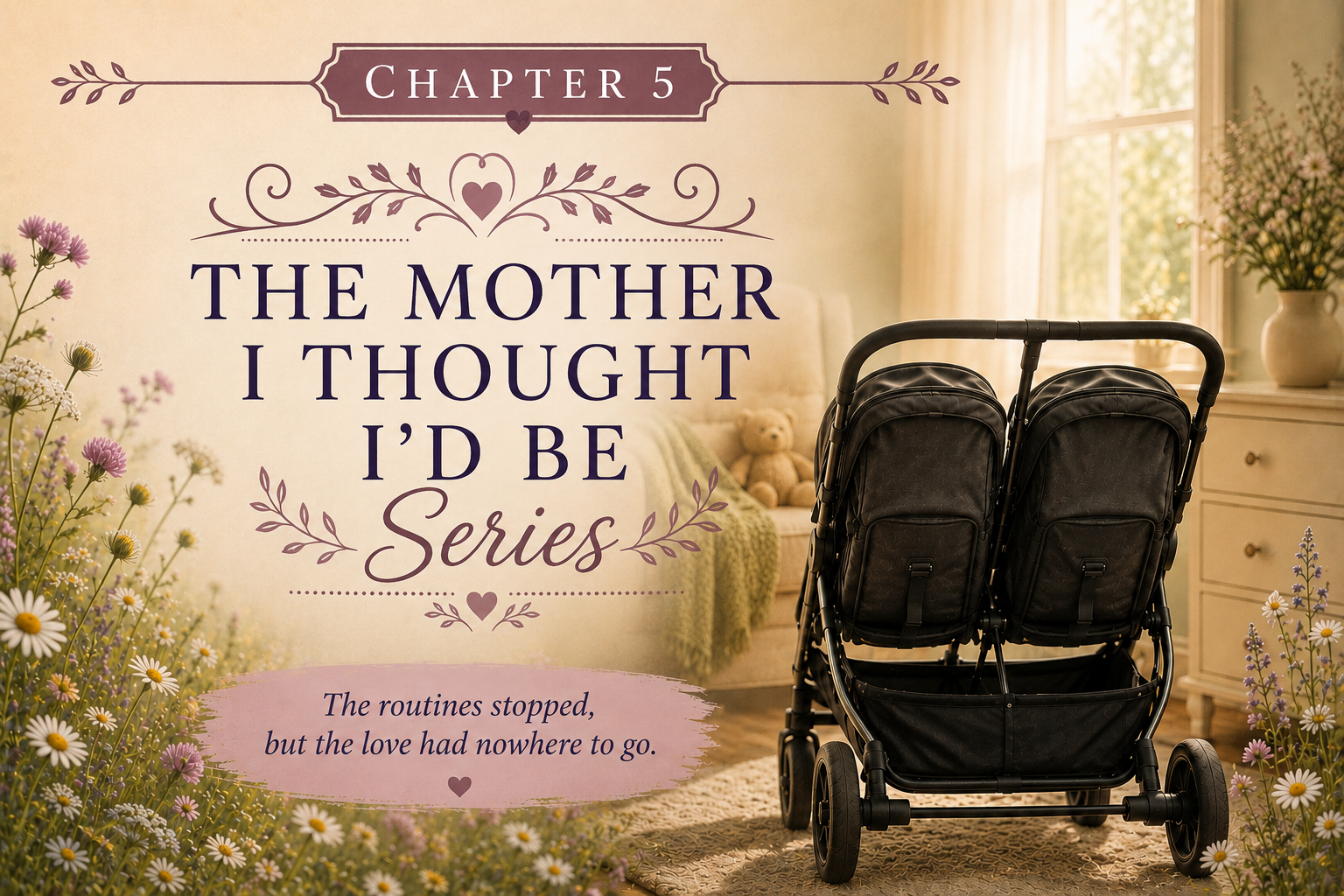
The double stroller that had carried the boys on our little adventures sat empty.
There were no sleepy babies to rock at night.
No songs to sing as they drifted off.
All of those ordinary things I’d once dreamed about—and then finally got to experience—were suddenly memories.
For years, I had wondered what it would feel like to be needed by a child.
Now I knew.
What I didn’t know was what to do with all that love when the children I’d been giving it to were no longer there.
How Do You Grieve Someone Who Is Still Alive?
This may be one of the hardest parts to explain.
The boys didn’t die.
They went to live with members of their family.
And I am grateful they had family who could welcome them.
I hope they’re safe.
I hope they’re happy.
I hope they’re deeply loved.
I hope they’re growing and laughing and discovering the world.
I want good things for them.
And I miss them.
Those truths have had to learn how to live together inside me.
Foster care grief can be difficult to explain because the child is still alive.
Reunification or placement with family may be exactly what is supposed to happen.
You can understand that with your head.
Your heart may still break.
How do you explain:
I’m glad they’re with family, and I still wish they were here.
I’ve learned that I don’t have to choose between those feelings.
Both can be true.
The World Kept Moving

That’s one of the cruel little realities of grief.
Your world changes completely.
But Tuesday still becomes Wednesday.
The mail still arrives.
The laundry still needs to be done.
People still go to work.
Stores still open.
Everyone else’s lives keep moving.
And eventually, you’re expected to move with them.
But part of me was still standing at my front door, watching that van drive away.
I had imagined a future with those boys.
I had allowed myself to wonder whether they might stay.
I’d pictured them growing up.
So when they left, I wasn’t only grieving the little boys I missed.
I was grieving another future that wasn’t going to happen.
Again.
That word carries a lot for me.
Infertility had already taught me what it felt like to grieve a future I’d imagined.
Foster care had opened another possibility.
Maybe motherhood wouldn’t happen the way I’d expected.
Maybe it would find me through a different door.
For a little while, I thought it had.
And then that future disappeared too.
We Kept Trying
We didn’t stop fostering immediately.
There were other placements after the twins.
The children who came afterward were older and had needs very different from the two babies I’d cared for.
They deserved patience, stability, understanding, and adults who could meet them where they were.
I knew that.
But knowing what children deserved didn’t magically give me the emotional capacity to provide everything they needed.
I was still grieving.
I don’t think I fully understood how much at the time.
Part of me wanted to keep going because stopping felt like giving up.
Maybe another placement would be different.
Maybe I’d feel ready.
Maybe this was still the path I was supposed to follow.
There’s that word again.
Maybe.
For years, maybe had kept me moving.
Maybe this month.
Maybe I’ll get pregnant again.
Maybe foster care is how I’ll become a mother.
Maybe these babies will stay.
Maybe the next placement will be different.
Hope can carry us through incredibly difficult things.
But eventually I had to ask myself a different question:
Was continuing to hope also keeping me from admitting how much I was hurting?
When Love Isn’t the Only Thing a Child Needs
I had love to give.
I still do.
But children in foster care need more than love.
They may need tremendous patience, consistency, understanding, structure, advocacy, and adults with enough emotional reserves to remain steady when things become difficult.
The children who came into our home after the twins had their own stories.
They weren’t there to fill the space the boys had left behind.
And it wouldn’t have been fair for me to expect them to.
Eventually, I had to admit something I didn’t want to admit.
I wasn’t okay.
I was still carrying grief from the twins, and continuing to foster was becoming too difficult for us.
That didn’t mean the other children were unlovable.
It didn’t mean their needs were somehow too much.
It meant I had reached my own limit.
Sometimes caring about children also means being honest about whether you’re able to give them what they need.
At that point in my life, I couldn’t keep pretending I was.
Closing Another Door
Eventually, we stopped fostering.
Even now, that sentence carries weight.
Because fostering hadn’t simply been something we did.
For me, it represented possibility.
After years of infertility, foster care had opened another door.
Maybe motherhood wouldn’t look the way I’d imagined.
Maybe it would arrive differently.
And for a little over five months, it did.
So when fostering ended, I wasn’t only ending that chapter of our lives.
I was facing another painful question:
Was this another door to motherhood closing?
Pregnancy hadn’t happened.
The babies hadn’t stayed.
And now fostering was ending too.
There are only so many times I can watch a dream change shape before I begin wondering whether it’s time to stop chasing it.
I didn’t have an answer then.
Some days, I’m still not sure I do.
When Everyone Else Has Moved On
In the beginning, people understand grief.
They ask how you’re doing.
They listen.
They give you space to be sad.
Then time passes.
Life moves forward.
And sometimes the people around you assume your grief has moved forward too.
There have been times when I’ve felt I should stop talking about the boys.
As though missing them after enough time has passed means I’m stuck somewhere I shouldn’t be.
So I’ve often kept it inside.
But writing this series is teaching me something:
Silence doesn’t make grief disappear. It only makes grief lonelier.
I don’t spend every moment thinking about the twins.
There is still joy in my life.
But sometimes something brings them rushing back.
A stroller.
A baby.
A song.
A memory.
And suddenly, I miss them all over again.
That doesn’t mean I’ve gone backward.
It means they mattered to me.
Maybe Healing Isn’t Moving On
For a long time, I thought healing meant eventually leaving painful things behind.
I’m beginning to think healing may be something different.
Maybe it isn’t about moving on from the people we’ve loved.
Maybe it’s learning how to carry their place in our story without letting the loss become the entire story.
The twins aren’t here anymore.
Foster care isn’t part of my daily life anymore.
The house is quiet again.
But the woman who lived those five months is still here.
She knows what it feels like to hold two sleepy babies.
She knows the chaos of caring for twins.
She knows the pride of pushing a double stroller through the world.
And she knows how deeply she can love.
Losing the boys didn’t take those things away from me.
Stopping foster care didn’t erase them either.
To the Foster Parent Who Still Misses Them
Maybe there’s a child you still think about.
Maybe you watched them leave.
Maybe you’re grateful they were reunited with family and still cried after the door closed.
Maybe years have passed and something as simple as a song or photograph can bring them back to you.
You don’t have to choose between being grateful for their reunification and grieving their absence.
Knowing from the beginning that goodbye is possible doesn’t make the goodbye painless.
And knowing reunification is the goal doesn’t make the attachment unreal.
They mattered.
The time you shared mattered.
The love mattered.
I’d Love to Hear From You
If you’ve fostered a child who later left your home, what is something about the aftermath you wish someone had prepared you for?
Was it walking back into a quiet house?
Wondering how they were doing?
Seeing their belongings after they were gone?
Trying to decide whether you could open your home—and your heart—again?
Or was it something completely different?
If you feel comfortable, tell me about it in the comments below.
You don’t need to share anything that feels too personal. You can simply tell me what you wish someone had said to you.
And if you’d rather not share publicly, you’re always welcome to reach out through my contact page.
There may be another foster parent reading these words who is wondering why they still hurt when reunification was what everyone had hoped for.
Maybe your story will help them understand something I’ve had to learn myself:
Being happy for a child’s next chapter doesn’t mean you can’t grieve the ending of yours.
Both can be true.


Leave a Reply