
Tag: mindfulness

  • Boost Your Well-Being with Simple Gratitude Practices

    Woman with her hair in a bun sitting beside her dog in a peaceful wildflower field under sunny skies and fluffy clouds, reflecting on gratitude and mindfulness
    Taking time to appreciate the beauty of nature can be one of the simplest and most meaningful ways to practice gratitude

    Did you know that people who regularly practice gratitude tend to experience greater happiness, lower stress levels, and even better sleep? It’s a simple habit that takes only a few minutes a day, yet it has the power to transform how you view yourself and the world around you.

    I didn’t always believe something so simple could make such a difference.

    Like many people, I went through a season where my days felt consumed by work, responsibilities, and an endless list of things that still needed to be done. Instead of noticing what was going well, I found myself focusing on everything that wasn’t.

    One evening, I decided to try something different. Before going to bed, I wrote down three things I was grateful for. They weren’t extraordinary—my family’s laughter around the dinner table, a hot cup of coffee, and the colorful sunset outside my window—but they reminded me that even difficult days hold moments worth appreciating.

    That small habit gradually changed the way I approached each day. I became less focused on what I lacked and more aware of the blessings that had been there all along.

    Gratitude isn’t about pretending life is perfect. It’s about choosing to recognize the good that’s already present, even during life’s challenges. And as research continues to show, that simple shift in perspective can have a remarkable impact on your overall well-being.

    The Science Behind Gratitude

    Gratitude isn’t just a feel-good practice; it’s backed by research.

    Research by psychologists Robert Emmons and Michael McCullough, published in the Journal of Personality and Social Psychology (2003), found that participants who regularly recorded things they were grateful for reported greater optimism, exercised more frequently, and experienced higher overall well-being than those who focused on daily frustrations.

    Additional research suggests that practicing gratitude can:

    • Reduce stress and anxiety
    • Improve sleep quality
    • Increase overall happiness
    • Strengthen relationships
    • Boost self-esteem
    • Build emotional resilience

    When you intentionally focus on positive experiences, your brain gradually becomes better at recognizing them. Over time, gratitude shifts from being something you practice to becoming part of how you see the world.

    Small Daily Gratitude Habits That Make a Big Difference

    1. Keep a Gratitude Journal

    Spend five minutes each day writing down three things you’re thankful for. They don’t need to be life-changing.

    A cozy pink desk with a gratitude journal, pen, coffee mug, lit candle, and soft office décor beside a sunny window overlooking trees and an open field.
    A peaceful journaling space with warm sunshine, a fresh cup of coffee, and a gratitude journal creates the perfect setting to slow down, reflect, and appreciate life’s simple blessings.

    Examples include:

    • A supportive friend
    • Your morning coffee
    • A beautiful sunset
    • Good health
    • Finishing an important task

    A dedicated gratitude journal can make it easier to build a consistent habit. I prefer journals with guided prompts because they remove the guesswork and encourage deeper reflection.

    When I first started keeping a gratitude journal, I wasn’t sure it would make much difference. Some evenings, it felt difficult to think of three positive things after a stressful day. But after a few weeks, I noticed I was paying more attention to the little moments—a kind conversation, a walk with my dog, or simply enjoying my morning coffee. Those small moments gradually became the highlights of my day.

    👉 View My Favorite Gratitude Journal


    2. Start Your Morning with Gratitude

    Before checking your phone, pause for one minute and think of three things you’re grateful for.

    This simple habit can help set a calmer, more positive tone for your day.


    3. Practice Gratitude During Difficult Moments

    Life will always have challenges.

    Gratitude doesn’t erase them, but it helps you view them from a healthier perspective.

    Instead of asking:

    “Why is this happening to me?”

    Try asking:

    “What can I learn from this?”

    or

    “What is still going well today?”

    This small shift can reduce feelings of overwhelm while strengthening resilience.


    4. Express Gratitude to Others

    One of the easiest ways to improve relationships is simply saying “thank you.”

    Send a thoughtful text.

    Write a handwritten note.

    Tell someone how much they mean to you.

    Those small expressions of appreciation often create lasting memories.


    5. Create a Gratitude Space at Home

    Your surroundings influence your mindset.

    One thing that makes my gratitude routine more enjoyable is having a cozy blanket and a softly scented candle nearby. Creating a relaxing environment makes it easier to slow down and be present.

    To create your own relaxing and peaceful environment you could include:

    Creating a small reading corner in my home became more than just decorating a space. It gave me a quiet place to slow down each evening, write in my journal, and reflect on the day. Even spending ten minutes there helped me feel more grounded before bedtime.

    Cozy reading corner with a comfortable armchair, soft blanket, books, candles, plants, and a journal creating a peaceful space for gratitude and reflection.
    Creating a peaceful reading space can encourage daily gratitude, journaling, and moments of quiet reflection.

    Quick Ways to Practice Gratitude Today

    ✔ Smile at a stranger.

    ✔ Write down one happy memory.

    ✔ Tell a loved one you appreciate them.

    ✔ Spend five minutes outside.

    ✔ Turn off your phone for ten minutes.

    ✔ Read something inspiring.

    ✔ Celebrate one small win.

    These bite-sized ideas are easy to scan and encourage readers to take immediate action.

    Gratitude and Mental Well-Being

    Although gratitude isn’t a replacement for professional mental health care, it can become an important part of a healthy self-care routine.

    Many people who consistently practice gratitude report:

    • Greater optimism
    • Lower stress levels
    • Improved emotional balance
    • Better relationships
    • Increased life satisfaction

    Even on difficult days, identifying one positive moment can help interrupt negative thought patterns.

    Gratitude Helps You Recognize Abundance

    It’s easy to believe happiness is always tied to the next milestone:

    • A promotion
    • A larger home
    • More savings
    • More followers

    While goals are valuable, gratitude reminds us that joy doesn’t have to wait.

    You can celebrate today’s blessings while still working toward tomorrow’s dreams.

    Join the 7-Day Gratitude Challenge

    Are you ready to experience the benefits of gratitude for yourself? This simple challenge takes just a few minutes each day and can help you develop a habit that supports greater joy, resilience, and peace of mind.

    Day 1: Write down three things you’re grateful for.

    Day 2: Thank someone who has made a positive impact on your life.

    Day 3: Spend five quiet minutes outdoors appreciating nature.

    Day 4: Write about one good thing that happened today and why it mattered.

    Day 5: Challenge yourself to go one hour without complaining.

    Day 6: Reflect on a challenge that ultimately helped you grow.

    Day 7: Write a letter to your future self about everything you’re grateful for today.

    Printable Gratitude Checklist

    ☐ Day 1: Three Gratitudes

    ☐ Day 2: Thank Someone

    ☐ Day 3: Spend Time in Nature

    ☐ Day 4: Celebrate One Positive Moment

    ☐ Day 5: One Complaint-Free Hour

    ☐ Day 6: Reflect on Personal Growth

    ☐ Day 7: Letter to Your Future Self

    Keep this checklist somewhere you’ll see it each day—on your refrigerator, your desk, or tucked inside your journal. By the end of the week, you may be surprised at how much easier it becomes to notice life’s everyday blessings.

    📥 Download Your Free 7-Day Gratitude Checklist

    My Favorite Gratitude Tools

    If you’re looking to make gratitude part of your everyday routine, these products can help make the habit easier and more enjoyable.

    A Grateful Life Is Built One Day at a Time

    Looking back, I’m grateful that I gave such a simple habit a chance. What started as writing down three thankful thoughts each evening slowly became a new way of seeing the world. Life didn’t suddenly become perfect, but I became better at recognizing moments of joy, even on difficult days.

    That’s the beauty of gratitude—it doesn’t ask us to ignore our struggles. Instead, it reminds us that hope, kindness, and beauty can exist alongside them.

    Whether today is one of your best days or one of your hardest, there’s always something worth appreciating, no matter how small. As you continue your gratitude journey, remember that meaningful change rarely happens overnight. It’s created through small, consistent choices that shape our hearts and minds over time.

    If this article inspired you, consider starting your gratitude practice today with a journal, affirmation cards, or another tool that helps you stay consistent. The products I’ve recommended throughout this post are ones that can support your journey and make building this life-changing habit a little easier.

    Sometimes, the smallest act of gratitude becomes the beginning of life’s biggest transformation.

    We’d Love to Hear From You

    Gratitude looks different for everyone, and sometimes the smallest moments leave the biggest impact.

    What’s one thing you’re grateful for today?

    Share your answer in the comments below—I read every comment and would love to hear your story. Your experience might inspire someone else to begin their own gratitude journey.

    If you found this article helpful, consider sharing it with a friend or family member who could use a little encouragement today.

    Frequently Asked Questions

    How long does it take to see the benefits of practicing gratitude?

    Some people notice a shift in their mood within a few days, while lasting benefits often develop after several weeks of consistent practice.

    Do I need a gratitude journal?

    No. You can write in any notebook or even use a notes app. A guided journal can simply make it easier to stay consistent.

    What if I’m having a difficult day?

    Gratitude doesn’t require ignoring life’s challenges. It simply encourages you to notice even one positive thing, no matter how small.

    Can gratitude improve mental health?

    Research suggests gratitude can support emotional well-being, reduce stress, and increase optimism. However, it is not a substitute for professional mental health care when it’s needed.


    Sources

    • Emmons, R. A., & McCullough, M. E. (2003). Counting Blessings Versus Burdens: An Experimental Investigation of Gratitude and Subjective Well-Being. Journal of Personality and Social Psychology, 84(2), 377–389.
    • Harvard Health Publishing. Giving Thanks Can Make You Happier.
    • Greater Good Science Center, University of California, Berkeley. The Science of Gratitude.
    • Mayo Clinic. Stress Management and Positive Thinking.

    A Little Thank You: Some links in this post may be affiliate links. If you choose to shop through them, I may earn a small commission at no additional cost to you. As an affiliate, I earn from qualifying purchases. Your support helps keep The daZie Diaries going, and I’m so grateful you’re here. 🤍

  • Discover the Benefits of Mindfulness in Daily Life

    Discover the Benefits of Mindfulness in Daily Life

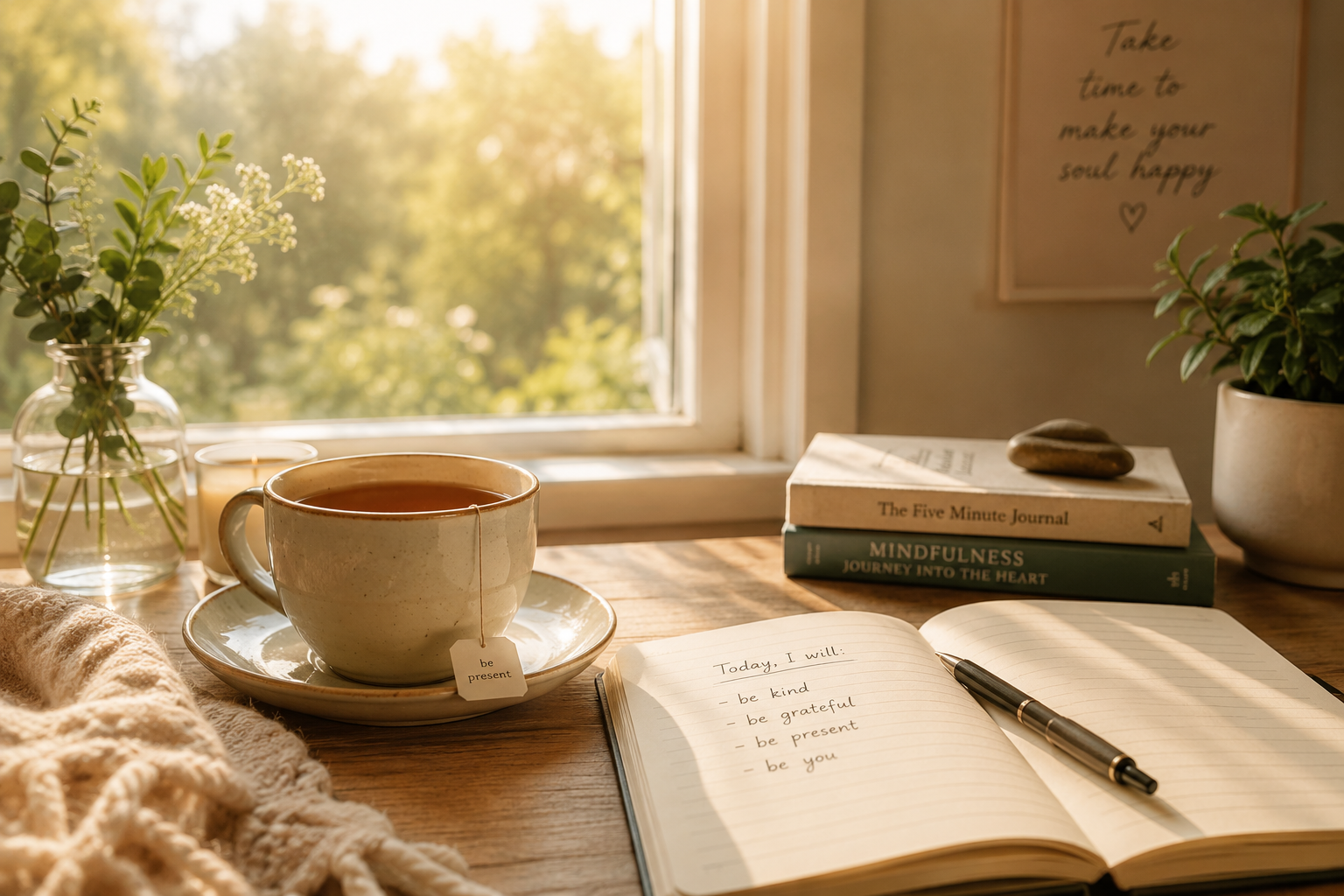
    In today’s fast-paced world, it’s easy to feel overwhelmed by endless to-do lists, notifications, and daily responsibilities. Mindfulness offers a simple way to slow down, reconnect with the present moment, and reduce stress. The good news? You don’t need hours of meditation or special equipment to begin. Small, consistent habits can make a meaningful difference.

    What Are Simple Mindfulness Habits for Beginners?

    Simple mindfulness habits for beginners include taking three deep breaths in the morning, practicing mindful eating, pausing for one minute to focus on your breathing, going for a mindful walk, and ending the day with a gratitude practice. These easy daily habits help reduce stress, improve focus, and build greater awareness without requiring hours of meditation.

    My Journey with Mindfulness

    A few years ago, I didn’t think mindfulness was for me. I assumed it meant sitting silently for long periods, trying to clear my mind completely. Between work, family responsibilities, and the constant stream of notifications on my phone, I couldn’t imagine finding the time.

    One particularly stressful week, I realized I was rushing through everything—even my morning coffee. I was already thinking about emails before the day had really begun. Instead of reaching for my phone one morning, I simply sat by the window, took a few slow breaths, and enjoyed my coffee without distractions. It lasted less than two minutes, but I noticed something surprising: I felt calmer and more prepared to face the day.

    That small moment became a daily habit. Over time, I started adding other mindful practices, like taking short walks without headphones and ending each evening by writing down three things I was grateful for. I still have busy days, and my mind still wanders—that’s completely normal. But mindfulness has taught me to pause, reset, and appreciate the present instead of constantly racing toward the next task.

    If you’re just starting, remember that you don’t have to do everything perfectly. One mindful minute today is better than waiting for the “perfect” time that may never come.

    What Is Mindfulness?

    Mindfulness is the practice of paying attention to the present moment with openness and without judgment. Instead of dwelling on the past or worrying about the future, mindfulness encourages you to fully experience what’s happening right now.

    Research suggests that practicing mindfulness regularly can help reduce stress, improve focus, enhance emotional well-being, and even support better sleep.

    Five Simple Mindfulness Habits to Try

    1. Start Your Morning with Three Deep Breaths

    Before checking your phone or jumping into your day, pause for a moment. Take three slow, deep breaths. Notice the sensation of the air filling your lungs and leaving your body. This simple practice helps create a calm, intentional start to your morning.

    2. Practice Mindful Eating

    Instead of rushing through meals, slow down and truly experience your food. Notice the colors, textures, flavors, and aromas. Eating mindfully can improve digestion and help you appreciate each meal more fully.

    3. Take a One-Minute Pause

    Throughout the day, stop for just one minute. Close your eyes if you’re comfortable, breathe naturally, and observe your thoughts without trying to change them. Even sixty seconds of mindfulness can help reset your mind.

    4. Go for a Mindful Walk

    Whether you’re walking around your neighborhood or through a local park, pay attention to your surroundings. Listen to the sounds, notice the breeze, observe the colors, and feel each step. Walking becomes more refreshing when you are fully present.

    5. End Your Day with Gratitude

    Before going to bed, write down three things you’re grateful for. They don’t have to be major achievements—simple moments like a kind conversation, a beautiful sunset, or a warm cup of tea are just as meaningful. Gratitude helps shift your focus toward the positive aspects of everyday life.

    Common Challenges for Beginners

    When Your Mind Won’t Stop Wandering

    One of the biggest misconceptions about mindfulness is that your mind should become completely quiet. In reality, wandering thoughts are normal. Each time you gently bring your attention back to your breath or the present moment, you’re strengthening your mindfulness practice.

    Finding Time in a Busy Schedule

    You don’t need 30 minutes a day to benefit from mindfulness. Start with just one or two minutes. Small, consistent practices are often easier to maintain than long sessions.

    Worrying About Doing It “Right”

    There is no perfect way to practice mindfulness. The goal isn’t to stop thinking—it’s simply to notice your thoughts without judgment and gently return your focus to the present.

    Staying Consistent

    Like any new habit, mindfulness takes time to become part of your routine. Pair it with an activity you already do each day, such as drinking your morning tea, taking a walk, or getting ready for bed.

    Tips for Building a Mindfulness Practice

    • Start with just a few minutes each day.
    • Focus on consistency rather than perfection.
    • Accept distractions without criticizing yourself.
    • Connect mindfulness with an existing daily routine.
    • Celebrate small wins as your new habits develop.

    The Science Behind Mindfulness

    A growing body of research supports the benefits of mindfulness. Studies have found that regular mindfulness practice can help reduce stress, improve attention, enhance emotional regulation, and contribute to overall well-being. While everyone’s experience is unique, even short daily practices have been associated with positive mental and physical health outcomes.

    Learn More

    Your Mindfulness Journey Starts Today

    Mindfulness isn’t about achieving perfection or finding hours of free time—it’s about making small, intentional choices that help you stay present. Every deep breath, mindful meal, or moment of gratitude is a step toward a calmer and more balanced life.

    The best part is that you don’t have to change everything at once. Choose just one mindfulness habit from this article and commit to practicing it today. As that habit becomes part of your routine, add another. Over time, these simple moments of awareness can create lasting positive changes in your mental, emotional, and even physical well-being.

    Remember, progress happens one mindful moment at a time. Start small, stay consistent, and be patient with yourself. Your future self will thank you for taking that first step today.

    Frequently Asked Questions

    How do beginners practice mindfulness?

    Beginners can practice mindfulness by starting with small, manageable habits. Spend one or two minutes focusing on your breathing, pay attention while eating a meal without distractions, or take a mindful walk while noticing the sights and sounds around you. The key is consistency rather than perfection.

    What are the easiest mindfulness exercises?

    Some of the easiest mindfulness exercises include:

    • Taking three slow, deep breaths.
    • Observing your surroundings for one minute.
    • Eating one meal without using your phone.
    • Writing down three things you’re grateful for.
    • Paying attention to your breathing before going to sleep.

    These exercises require very little time and can easily fit into a busy schedule.

    How long should beginners practice mindfulness?

    You don’t need to meditate for long periods to experience benefits. Most beginners can start with just one to five minutes a day. As mindfulness becomes part of your routine, you can gradually increase the amount of time if you choose.

    Can mindfulness really reduce stress?

    Yes. Research suggests that regular mindfulness practice can help lower stress, improve emotional regulation, and increase overall well-being. While results vary from person to person, many people notice positive changes after practicing consistently for several weeks.

    Do I need to meditate to be mindful?

    No. Meditation is one way to practice mindfulness, but it’s not the only way. Everyday activities like walking, eating, breathing, listening, or even washing dishes can become mindfulness exercises when you give them your full attention.

    How can I make mindfulness a daily habit?

    The easiest way is to attach mindfulness to an activity you already do every day. For example, take three deep breaths before your morning coffee, practice gratitude before bed, or spend one minute focusing on your breathing during your lunch break. Starting small makes it easier to stay consistent.

    🌿 Quick Summary

    Start your morning with three deep breaths before checking your phone.

    🍎 Practice mindful eating by slowing down and noticing the flavors, textures, and aromas of your food.

    ⏸️ Take a one-minute pause during your day to focus on your breathing.

    🚶 Enjoy a mindful walk by paying attention to the sights, sounds, and sensations around you.

    🙏 End each day with gratitude by writing down three things you’re thankful for.

    💚 Remember: Start with just one habit today. Small, consistent steps lead to lasting change.

    Join the Conversation

    Mindfulness looks different for everyone, and there’s no single “right” way to practice it. Whether you’re just beginning or you’ve been practicing for years, your experiences can encourage someone else who’s starting their journey.

    I’d love to hear from you!

    • Which mindfulness habit are you excited to try first?
    • Have you faced any challenges while practicing mindfulness?
    • What simple habit has made the biggest difference in your daily life?

    Share your thoughts, experiences, or favorite mindfulness tips in the comments below. Your story might be exactly what another reader needs to feel inspired.

    If you found this guide helpful, please consider sharing it with a friend or family member who could use a little more peace and presence in their day. Together, we can create a supportive community focused on living more mindfully—one small habit at a time.


  • Living with Anxiety: Finding Strength in the Everyday

    Living with Anxiety: Finding Strength in the Everyday

    Anxiety affects millions of people worldwide, yet it often remains misunderstood. According to the World Health Organization, anxiety disorders are among the most common mental health conditions globally, affecting hundreds of millions of people each year. Despite how common it is, living with anxiety can feel isolating and overwhelming.

    For many people, anxiety isn’t just occasional nervousness before a big event. It’s a persistent feeling of worry, fear, or unease that can impact work, relationships, sleep, and overall quality of life.

    Disclosure: Some links in this article may be affiliate links. If you make a purchase through these links, I may earn a small commission at no additional cost to you.

    My Experience with Anxiety

    One of the greatest sources of comfort in my life has been my five dogs. Living with anxiety can sometimes feel overwhelming, especially on days when my thoughts seem to race and stress feels impossible to escape. During those moments, my dogs have a way of bringing me back to the present.

    Whether they’re following me around the house, encouraging me to get outside for a walk, or simply curling up beside me, they provide a sense of calm and companionship that is difficult to put into words. Their unconditional love reminds me that I don’t have to face difficult days alone.

    Research has shown that spending time with pets can help reduce stress and promote feelings of well-being. While my dogs aren’t a cure for anxiety, they have become an important part of my coping routine. They encourage me to stay active, maintain a daily routine, and focus on the simple joys in life.

    For anyone living with anxiety, finding healthy sources of comfort and support can make a meaningful difference. For me, my five dogs are a daily reminder to slow down, take a breath, and appreciate the present moment.

    Understanding Anxiety

    Anxiety is the body’s natural response to stress, but when those feelings become persistent and overwhelming, they can interfere with everyday life.

    Common symptoms include:

    • Excessive worrying
    • Difficulty concentrating
    • Restlessness
    • Fatigue
    • Rapid heartbeat
    • Muscle tension
    • Trouble sleeping
    • Irritability

    Because anxiety often affects both the mind and body, managing it usually requires a combination of mental, emotional, and physical strategies.

    Common Myths About Anxiety

    Myth #1: Anxiety Is Just Worrying Too Much

    Fact: Anxiety is a legitimate mental health condition that involves both psychological and physical symptoms.

    Myth #2: People with Anxiety Should Just Relax

    Fact: Anxiety cannot simply be turned off. Effective management often involves coping strategies, lifestyle changes, and sometimes professional support.

    Myth #3: Anxiety Means You’re Weak

    Fact: Many highly successful, resilient people live with anxiety. Seeking help demonstrates strength and self-awareness.

    Practical Strategies for Managing Anxiety

    1. Practice Mindfulness and Deep Breathing

    Mindfulness helps bring your attention back to the present moment instead of focusing on future worries.

    Try:

    • Deep breathing exercises
    • Guided meditation
    • Progressive muscle relaxation
    • Grounding techniques

    2. Prioritize Physical Activity

    Regular exercise helps reduce stress hormones and boosts mood-enhancing chemicals in the brain.

    Examples include:

    • Walking
    • Yoga
    • Cycling
    • Swimming
    • Strength training

    Even 20–30 minutes of movement can make a difference.

    3. Create Healthy Daily Habits

    Consistency provides stability during anxious periods.

    Focus on:

    • Getting enough sleep
    • Eating balanced meals
    • Staying hydrated
    • Limiting caffeine and alcohol
    • Taking breaks when needed

    4. Challenge Negative Thoughts

    Anxiety often convinces us that worst-case scenarios are likely.

    When anxious thoughts arise, ask:

    1. What evidence supports this fear?
    2. What evidence contradicts it?
    3. What would I tell a friend experiencing this same concern?

    This simple exercise can help create a more balanced perspective.

    5. Reach Out for Support

    You don’t have to face anxiety alone.

    Consider:

    • Talking to trusted friends or family
    • Joining support groups
    • Working with a therapist
    • Consulting a healthcare professional

    Seeking support is one of the most effective steps toward recovery.

    Resources That May Help

    If you’re looking for additional support, consider exploring:

    • The National Institute of Mental Health (NIMH)
    • The Anxiety & Depression Association of America (ADAA)
    • Local mental health professionals
    • Anxiety workbooks and guided journals
    • Mindfulness and meditation apps

    Recommended reading:

    The Importance of Self-Compassion

    Many people living with anxiety are incredibly hard on themselves. They may feel frustrated when anxious thoughts return or when progress feels slow.

    The truth is that healing is not linear.

    Some days will feel easier than others. What matters most is continuing to show yourself patience and understanding along the way.

    Treat yourself with the same kindness you would offer a loved one facing a difficult challenge.

    Moving Forward with Hope

    Living with anxiety is not about eliminating every fearful thought. It is about learning how to respond to those thoughts in healthier, more constructive ways.

    While anxiety may be part of your story, it does not define who you are or what you can achieve.

    Every small step matters. Every time you choose self-care, seek support, challenge a negative thought, or simply make it through a difficult day, you are making progress.

    Remember: growth often happens quietly. The fact that you’re reading this and looking for ways to better understand anxiety is already a sign of strength and determination.

    Join the Conversation

    Have you experienced anxiety or discovered strategies that help you cope?

    Share your thoughts, experiences, or favorite coping techniques in the comments below. Your story may encourage someone else who is facing similar challenges and remind them that they are not alone.


    A Little Thank You: Some links in this post may be affiliate links. If you choose to shop through them, I may earn a small commission at no additional cost to you. As an affiliate, I earn from qualifying purchases. Your support helps keep The daZie Diaries going, and I’m so grateful you’re here. 🤍