Tag: life after infertility

  • What Was Left of Me

    What Was Left of Me

    For a long time, I thought healing would look like getting over it.

    Getting over infertility.

    Getting over the babies who left.

    Getting over foster care.

    Getting over the life I had pictured so clearly that sometimes it felt less like a dream and more like a memory from a future I had somehow lost.

    I thought one day I would wake up and none of it would hurt anymore.

    I would hear a pregnancy announcement and feel only happiness.

    I would walk past the baby aisle without noticing the rows of tiny socks, soft blankets, and bottles lined neatly beneath fluorescent lights.

    I would see a double stroller and not remember the familiar weight of my hands wrapped around the handle, the squeak of the wheels against the sidewalk, or two sleepy little faces tucked beneath the shade.

    I would stop wondering how old they were now.

    I would stop doing the math.

    But grief doesn’t work that way.

    At least mine didn’t.

    It didn’t pack a suitcase, close the door behind itself, and leave.

    It moved into quieter rooms.

    It stopped shouting and learned how to whisper.

    And eventually, so did I.

    The Life I Kept Waiting For

    For years, so much of my life felt like waiting.

    Waiting for a positive pregnancy test.

    Waiting for answers.

    Waiting for treatments to work.

    Waiting for the phone to ring about a foster placement.

    Waiting to find out whether a child would stay.

    Waiting for court dates and decisions made in rooms I wasn’t sitting in.

    Waiting to know if I was finally going to get to keep the thing I loved.

    I became very good at waiting.

    I knew the strange weight of silence when it didn’t.

    I knew how hope could make an ordinary day feel electric, as if something life-changing might happen at any moment.

    And I knew how quickly that electricity could disappear.

    What I wasn’t very good at was living while I waited.

    There was always an imaginary version of my life somewhere ahead of me, glowing just beyond my reach.

    The version where everything finally worked out.

    Where there were little shoes by the door.

    Crumbs beneath the kitchen table.

    Bath toys drying along the edge of the tub.

    Someone calling for me from another room.

    The version where I became the mother I thought I’d be.

    I kept believing that once I reached her, then my real life would begin.

    But she kept moving farther away, like the horizon—visible enough to chase, impossible to touch.

    Eventually, I had to ask myself a question I didn’t want to ask.

    What if this is my life?

    Not the waiting room.

    Not the chapter before everything gets fixed.

    Not the temporary version I had to endure until the real story started.

    My actual life.

    Could I live it?

    More than that, could I learn to love it?

    Could I stop treating the life I had as the consolation prize for the life I wanted?

    Who Was I Without Motherhood?

    That question was harder than I expected.

    Because somewhere along the way, motherhood had stopped being something I wanted and had become part of how I understood myself.

    I had prepared for it.

    Prayed for it.

    Grieved it.

    Fought for it.

    And, for a little while, lived it.

    I had warmed bottles in the blue-gray darkness of early morning, standing barefoot in the kitchen while the rest of the house slept.

    I had rocked babies against my chest and felt their bodies slowly become heavier as sleep took over.

    I had smelled baby shampoo on damp hair.

    I had washed tiny socks that somehow disappeared in the laundry.

    I had packed diaper bags until I could do it without thinking.

    Bottles.

    Wipes.

    Diapers..

    One more outfit because you always needed one more outfit.

    I had learned the strange language of cries.

    Hungry.

    Tired.

    Wet.

    Scared.

    Hold me.

    I had been needed in the most ordinary, exhausting, beautiful ways.

    And then the babies left.

    Eventually, foster care ended too.

    The bottles disappeared from the counter.

    The tiny clothes stopped tumbling through the dryer.

    The car seats were gone.

    The house, once filled with crying and laughter and the constant hum of caring for someone, became so quiet I could hear the refrigerator running from the next room.

    And I was left standing inside that silence wondering what all of it made me now.

    Was I a mother?

    Was I not a mother?

    Was I something in between?

    There wasn’t a neat word for it.

    There still isn’t.

    The Space Between the Words

    People like categories.

    Mother.

    Not a mother.

    But some of us have lived in the space between those words.

    We have mothered children we didn’t give birth to.

    Loved children we weren’t allowed to keep.

    Kissed foreheads.

    Changed diapers.

    Sat beside cribs listening for breathing.

    Memorized favorite foods, bedtime routines, and the exact way a small body curled against us when it finally felt safe enough to sleep.

    We made room in our homes and in our hearts knowing there was always a possibility that one day someone would come and take the car seat, the clothes, the bottles—

    and the child.

    Then the door would close.

    And somehow the room would still smell like baby lotion.

    A forgotten sock might still be underneath the couch.

    A sippy cup might still be sitting in the dishwasher.

    Evidence that someone had been there.

    Evidence that love had lived there.

    When Stopping Felt Like Failing

    For a while, stopping foster care felt like another failure.

    I didn’t say that out loud very often.

    But I felt it.

    I had already failed to get pregnant.

    At least, that’s how it felt then.

    My body hadn’t done what I believed it was supposed to do.

    Month after month, hope rose inside me only to disappear again.

    Each disappointment felt like another door closing.

    Then foster care became another path toward motherhood.

    Maybe this was how I would get there.

    But eventually, I couldn’t keep doing that either.

    And that brought another question I didn’t want to face.

    What did that say about me?

    I knew all the reasonable answers.

    I knew infertility wasn’t a personal failure.

    I knew foster care was never supposed to be a replacement for having biological children.

    I knew recognizing my limits was responsible.

    I knew children deserved caregivers who had the emotional capacity to meet them where they were.

    I knew all of that.

    But knowing something in your head and believing it about yourself can be miles apart.

    Deep down, there was still a voice saying:

    You couldn’t do this either.

    For a long time, those words followed me like a shadow.

    Learning That Love Has Limits

    Over time, though, I began to understand something I couldn’t see while I was in the middle of it.

    Stopping wasn’t the same as failing.

    Sometimes stopping is what happens when you finally tell yourself the truth.

    I wasn’t okay.

    And pretending I was okay wasn’t helping anyone.

    Not me.

    Not my husband.

    Not the children who came through our home.

    I had believed love should be enough.

    If I loved hard enough, stayed patient enough, sacrificed enough, learned enough—surely I could keep going.

    But love isn’t magic.

    Love couldn’t erase trauma.

    Love couldn’t undo what happened to a child before they came through my door.

    And love couldn’t turn me into the person I thought I was supposed to be.

    Sometimes love meant staying.

    But sometimes love also meant knowing when I had reached my limit.

    That was one of the hardest things I ever had to accept.

    The Grief Nobody Could See

    There is a particular kind of loneliness in grieving a life that never happened.

    There are no photographs of it.

    No funeral.

    No anniversary everyone remembers.

    No empty chair anyone else recognizes.

    No one sends flowers for the baby you never had.

    No one knows that a certain month hurts because that was when you thought you’d have a newborn sleeping beside your bed.

    No one realizes that a child’s birthday can make you pause in the middle of an ordinary day and wonder how old your own child might have been.

    And when foster care is part of your story, the grief becomes even harder to explain.

    Because the children are alive.

    You want them to be safe.

    You want them to be loved.

    You want good things for them.

    And you miss them so deeply that sometimes the missing feels physical.

    All of those things can be true at once.

    For a long time, I believed I had to choose the acceptable emotion.

    Grateful.

    Supportive.

    Happy for them.

    Strong.

    But grief doesn’t disappear because another emotion is more socially acceptable.

    It just learns to hide.

    It waits.

    And hidden grief has a way of showing up in strange places.

    When Grief Finds You Anyway

    A song playing in the grocery store.

    The powdery smell of baby lotion.

    A tiny pair of shoes hanging from a rack.

    A baby crying two aisles over.

    The metallic click of a car seat buckle.

    A photograph you weren’t looking for.

    A memory arriving in the middle of an ordinary Tuesday.

    Sometimes grief came like a wave.

    Other times it was barely a ripple.

    But it came.

    For years, I thought those moments meant I wasn’t healing.

    I thought healing should be a straight road leading away from pain.

    Now I know it looks more like the ocean.

    Some days the water is calm.

    Some days something far away creates a wave you never saw coming.

    Those moments didn’t mean I was going backward.

    They meant I remembered.

    They meant I loved.

    Maybe Healing Isn’t Forgetting

    Eventually, I began to wonder if I had misunderstood healing altogether.

    Maybe healing isn’t reaching the point where nothing hurts.

    Maybe it’s reaching the point where the hurt no longer scares you.

    Maybe it’s letting a memory come without immediately trying to push it away.

    Yes.

    That happened.

    I loved them.

    I lost them.

    It hurt.

    And I survived it.

    There are things I will probably carry for the rest of my life.

    I don’t say that dramatically anymore.

    I say it gently.

    Because carrying something isn’t the same as being crushed by it.

    A scar is not an open wound.

    It is evidence that something hurt.

    And evidence that something healed.

    Making Room for Something Else

    For a long time, infertility was the loudest thing about me.

    Then foster care was.

    Then grief was.

    Everything seemed to orbit around what I didn’t have.

    What didn’t work.

    Who left.

    What ended.

    But slowly, almost without noticing, other things began taking up space again.

    At first, they were small.

    I laughed and realized afterward that I hadn’t felt guilty for laughing.

    I made plans without wondering whether treatments, court dates, or placements might change them.

    I enjoyed an ordinary afternoon without feeling like I was waiting for something.

    Then something even stranger happened.

    I started imagining a future without automatically putting a baby into the picture.

    At first, that terrified me.

    It felt like betrayal.

    As if accepting a life without children meant I hadn’t wanted them badly enough.

    As if moving forward meant I was leaving them behind.

    But eventually I understood something.

    Wanting something with your whole heart doesn’t mean you have to spend your whole life standing at its grave.

    The Woman Who Stayed

    The babies left.

    Foster care ended.

    The house became quiet again.

    But I was still there.

    Healing happened quietly.

    It happened while coffee brewed in the kitchen.

    While sunlight moved across the living room floor.

    While seasons changed outside the windows.

    While I folded ordinary laundry and made ordinary dinners and lived ordinary days.

    It happened when I realized I had gone several hours without thinking about what I’d lost.

    Then a whole day.

    Then longer.

    And when grief came back, because it always did, I stopped treating its return like proof that I had gone backward.

    I let it sit beside me for a while.

    Then I kept living.

    The Mother I Thought I’d Be

    I used to picture her so clearly.

    The mother I thought I’d be.

    She had children who called her Mom.

    There were toys scattered across the floor and fingerprints on the windows.

    There were school pictures stuck to the refrigerator.

    Christmas mornings.

    She packed lunches.

    She sat in carpool lines.

    Her life was loud and messy and ordinary.

    For years, I thought losing her meant losing part of myself.

    But now, when I picture her, I see her differently.

    She wasn’t foolish.

    She wasn’t naive.

    She was hopeful.

    I can love her.

    I can grieve for her.

    And I can let her go.

    Because she isn’t the only version of me worth knowing.

    The Woman I Became Instead

    There is also the woman who survived becoming someone she never planned to be.

    The woman who learned that love does not always end in keeping.

    The woman who mothered children for a season and loved them anyway.

    The woman who stood in a quiet house after the door closed and somehow kept breathing.

    The woman who learned that strength isn’t always holding on.

    Sometimes strength is opening your hands.

    I didn’t have to turn infertility into a blessing.

    I didn’t have to say foster care happened for a reason.

    I didn’t need to wrap every painful thing in a pretty explanation.

    There Is Life After the Life You Imagined

    I wish someone had told me that sooner.

    Not because I would have believed them.

    I probably wouldn’t have.

    But maybe the words would have stayed somewhere in the back of my mind like a porch light left on in the darkness.

    Something I could eventually find my way toward.

    There is life after the life you imagined.

    Not the same life.

    Not necessarily the life you would have chosen.

    But life.

    Real life.

    With laughter that doesn’t feel forced.

    With mornings that don’t begin with dread.

    With people you love.

    With quiet that no longer feels like punishment.

    With things you haven’t discovered yet.

    For a long time, I thought moving forward meant leaving those babies behind.

    It doesn’t.

    They are part of me.

    So is the woman who desperately wanted to get pregnant.

    So is the foster mother standing in a quiet house after the door closed.

    So is the woman who eventually had to say, I can’t do this anymore.

    I don’t have to abandon any of them. I just don’t have to live there forever.

    When the Quiet Changed

    The house was quiet again.

    For a long time, that quiet sounded like absence.

    Like something had been taken.

    Like a room after everyone has gone home, when you can still see the indentations where people sat but the voices are gone.

    Eventually, though, the quiet changed.

    It stopped sounding empty.

    I began to notice other things.

    The hum of the refrigerator.

    Rain against the windows.

    The creak of the floor beneath my feet.

    My own laughter from another room.

    My own breathing.

    My own life.

    Still here.

    Still happening.

    Still mine.

    Not the life I thought I’d have.

    Not the mother I thought I’d be.

    Mine.

    Healing has been learning that I can carry the past without asking it to become my future.

    There are still pages after loss.

    I know that now.

    And I am finally willing to turn them.


    Before You Turn the Page

    If you have ever grieved a child, a dream, a version of motherhood, or simply the life you were certain you would have, I hope you know there is room for your story here too.

    Maybe your house became quiet. Maybe yours was never filled in the way you hoped it would be. Maybe you’re still waiting. Maybe you’re only beginning to understand what you’ve lost. Or maybe you’re discovering, slowly, that your life is speaking to you again.

    A question to sit with:

    What version of yourself—or your future—have you had to grieve? What are you beginning to make room for now?

    Share your story if you’re ready.

    Sometimes the most powerful thing we can offer one another is the simple reminder:

    You are not the only one who has stood in the quiet and wondered what comes next.


  • I Don’t Want The Goodbye to Erase The Hello

    I Don’t Want The Goodbye to Erase The Hello

    Return to The Mother I Thought I’d Be Series

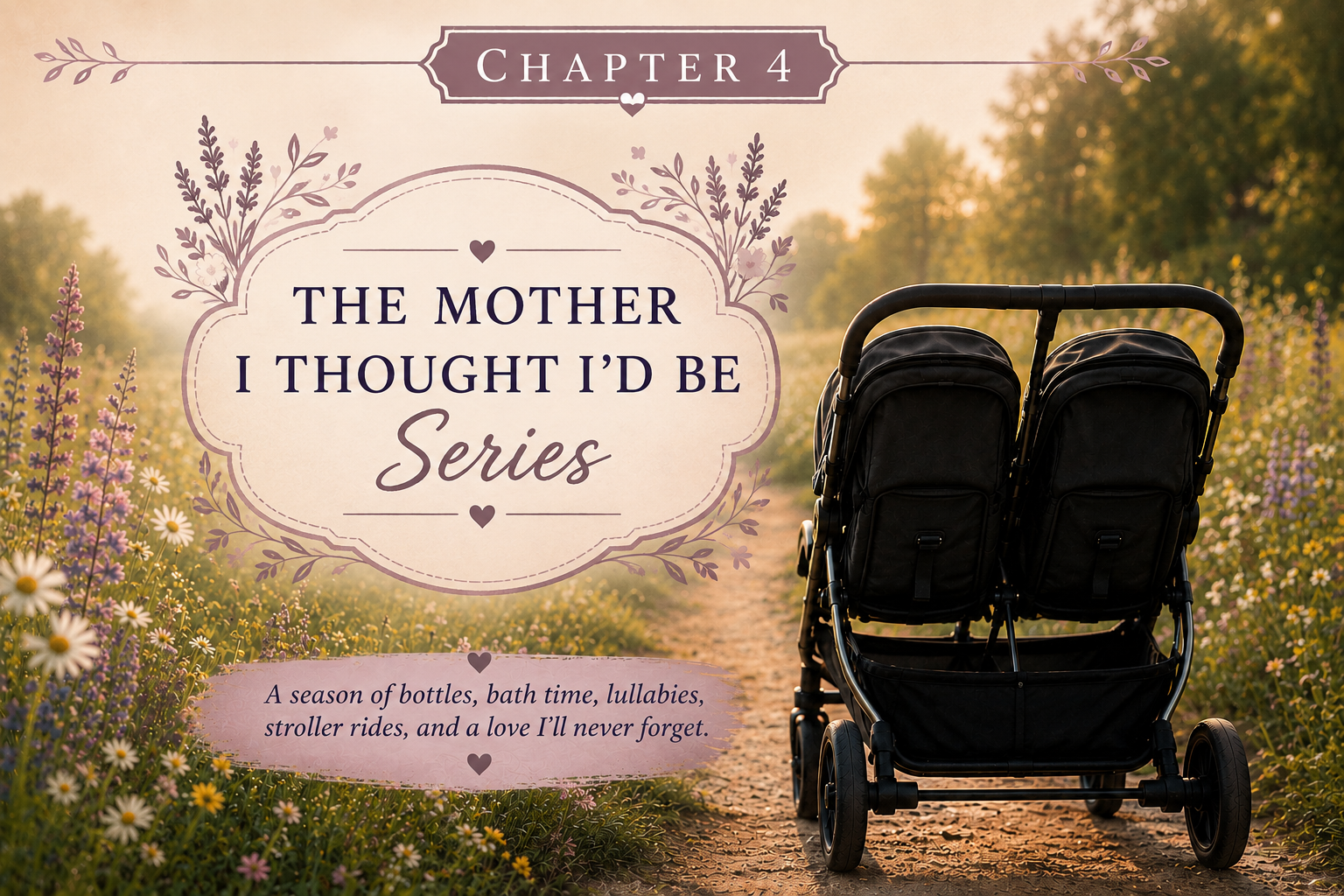
    Sometimes motherhood isn’t measured in years. Sometimes it’s found in bottles, bath time, lullabies, and the ordinary moments you never knew would become memories.

    When I think about the twins, it’s easy for my mind to go straight to the day they left.

    The tears.

    The empty house.

    The double stroller that suddenly had no one to carry.

    But I don’t want their story in my life to be remembered only by how it ended.

    Because before the heartbreak, there was joy.

    So much joy.

    For a little over five months, there were two tiny boys in my home who needed me.

    And for those five months, I got to experience something I had spent years longing for.

    I got to mother them.

    Maybe you’ve had a season like that too—a time in your life that was much too short but changed you forever.

    If you have, I hope you’ll think about that person or that season as you read this.

    Not only how it ended, but how beautiful it was while it was yours.

    Two Tiny Boys Came Home

    The twins came to us after being discharged from the NICU.

    They were so little.

    Suddenly, my days revolved around bottles, diapers, naps, laundry, baths, and figuring out how to meet the needs of two babies who didn’t particularly care that there was only one of me.

    There were two babies to feed. Two babies to change. Two babies who could cry at exactly the same time.

    And somehow, they both seemed to know precisely when I thought I might sit down.

    Life became busy very quickly.

    It was exhausting.

    It was messy.

    And I loved it.

    After spending so many years imagining what it would be like to care for a baby, there I was caring for two.

    Sometimes I’d look at them and almost couldn’t believe they were really there.

    Learning to Mother Two Babies at Once

    Twins taught me very quickly that sometimes you simply figure things out.

    I learned how to hold one baby while feeding the other.

    I learned how to comfort two little boys who sometimes needed me at exactly the same moment.

    And at night, I rocked them and sang to them as they drifted off to sleep.

    Those are some of the memories I hold closest now.

    Two sleepy babies.

    Heavy little eyelids.

    Tiny bodies relaxing as the house grew quiet.

    I don’t know whether they’ll ever remember the songs I sang.

    They probably won’t.

    But I remember.

    I remember looking down at their faces.

    I remember holding them close.

    And I remember knowing that, at least in that moment, they felt safe enough to fall asleep in my arms.

    There’s something beautiful about being someone’s safe place.

    Even when you don’t know how long you’ll get to stay.

    The Little Things I Miss

    They loved bath time.

    Watching those two little boys splash in the water could make an ordinary evening feel special.

    There was baby shampoo, warm towels, little wet feet, and all the maneuvering that comes with trying to bathe two babies.

    Then there were their vibrating bouncy seats.

    They loved those things.

    It’s funny what your heart decides to remember.

    Before they left, I probably never imagined I’d someday miss seeing two bouncy seats sitting in my house.

    Sometimes it’s the most ordinary things that become the memories we miss most.

    But that’s the thing about ordinary life.

    You don’t always realize you’re living a memory while it’s happening.

    A freshly bathed baby wrapped in a towel.

    Bottles lined up for the next feeding.

    Tiny clothes waiting to be folded.

    Two little seats bouncing away.

    At the time, it was simply Tuesday.

    Now I’d give almost anything to have one of those ordinary Tuesdays back.

    That Double Stroller

    For a little while, I wasn’t standing on the outside looking at motherhood. I was simply pushing two little boys through the world.

    And then there was the double stroller.

    I loved taking them places.

    Getting two babies ready to leave the house wasn’t exactly a quick process, but once everybody was settled, off we’d go.

    We went to stores.

    We took walks.

    Sometimes we got out simply because I wanted to take my boys somewhere.

    They weren’t even six months old yet, but I wanted to show them the world.

    People noticed twins.

    They’d stop us and peek into the stroller.

    They’d smile.

    They’d tell me how precious the boys were.

    And I’d smile proudly.

    For those moments, I wasn’t thinking about foster care.

    I wasn’t thinking about caseworkers or what might happen next.

    I wasn’t thinking about infertility or all the years I’d spent wondering whether I’d ever experience motherhood.

    I was simply pushing two little boys through the world.

    And I was happy.

    Really happy.

    The Ordinary Life I’d Wanted

    For years, I thought motherhood would begin with pregnancy.

    I imagined two lines on a pregnancy test.

    A growing belly.

    A hospital room.

    Bringing my baby home.

    But motherhood didn’t find me that way.

    Instead, it arrived unexpectedly through two little boys who needed somewhere safe to land.

    And suddenly, I had pieces of the ordinary life I’d dreamed about.

    Someone needed me in the middle of the night.

    Someone needed a bottle.

    Someone needed clean pajamas.

    Someone needed to be rocked.

    Someone needed comfort when he cried.

    My days weren’t entirely mine anymore.

    And after spending so many years longing to be needed in exactly that way, there was something incredibly precious about it.

    Was I tired?

    Of course.

    Were there probably moments when I wondered whether I’d ever sleep properly again?

    Absolutely.

    But exhaustion isn’t what stayed with me.

    Love did.

    Have you ever noticed that about the seasons of life you miss most?

    Sometimes the things that felt exhausting while we were living them become the very things we’d gladly experience one more time.

    When “Maybe” Crept In

    I knew what foster care was.

    I knew reunification was the goal whenever it could happen safely.

    My head understood that from the beginning.

    My heart was apparently a little slower to get the message.

    Because the longer the boys stayed, the more attached I became.

    How could I not?

    I knew their routines.

    I knew how they liked to be held.

    I was beginning to recognize their different cries.

    I knew what comforted them.

    I watched them grow.

    And somewhere along the way, one little word began creeping into my thoughts.

    Maybe.

    Maybe they’d stay.

    Maybe these two little boys who had unexpectedly entered my life would become part of our family forever.

    Maybe this was how motherhood was supposed to find me after all.

    I tried not to think too far ahead.

    But love has a way of imagining tomorrow.

    Mine certainly did.

    Was I Their Mother?

    I’ve thought about this question many times since they left.

    Was I their mother?

    Biologically, no.

    Legally, no.

    I was their foster mom.

    And I would never want my love for them to erase or diminish the family they belonged to.

    But I’ve also come to understand that motherhood isn’t only something we are.

    Sometimes it’s something we do.

    For a little over five months, I fed them.

    I bathed them.

    I changed them.

    I comforted them.

    I woke up with them.

    I sang to them.

    I rocked them to sleep.

    I worried about them.

    I celebrated them.

    I planned my days around them.

    And I loved them.

    Completely.

    So while I may not have been their mother forever, I mothered them during the time they were entrusted to me.

    I’m learning that I don’t have to make that experience smaller simply because it didn’t last.

    I Don’t Want the Goodbye to Erase the Hello

    The ending hurt.

    It still does.

    There are moments when I miss those boys so much that the grief feels surprisingly fresh.

    But I don’t want to remember only the goodbye.

    I want to remember the hello, too.

    I want to remember the first bottles.

    The baths.

    The bouncy seats.

    The stroller rides.

    The songs sung in the dark.

    The sleepy babies in my arms.

    The strangers who stopped to admire them.

    The ordinary days when my house was full of all the things I’d once dreamed about.

    There was exhaustion.

    There was uncertainty.

    There was hope.

    There was laughter.

    And there was love.

    So much love.

    The goodbye doesn’t get to erase any of that.

    Those Five Months Still Belong to Me

    I don’t know what the boys will remember about those first months of their lives.

    They were so little that they may never consciously remember any of it.

    But sometimes I wonder if love leaves a memory deeper than the kind we can put into words.

    I hope somewhere inside them remains the feeling of being held when they cried.

    Of being warm after a bath.

    Of being safe enough to sleep.

    Of hearing a familiar voice singing in the darkness.

    Most of all, I hope some small part of them remembers what it felt like to be loved completely.

    Because they were.

    For a little over five months, two tiny boys called my house home.

    It wasn’t forever.

    It wasn’t the ending I wanted.

    But it happened.

    They were here.

    I loved them.

    They changed me.

    I’m beginning to understand that something doesn’t have to last forever to matter.

    Some of the most meaningful chapters of our lives are painfully short.

    Their length doesn’t determine their worth.

    For a little over five months, I got to experience bottles and baths, sleepless nights and stroller rides, lullabies and little wet feet.

    I got to be needed.

    I got to love them.

    I got to mother them.

    And no goodbye can take those months away from me.

    I’d Love to Hear About the Love, Too

    So often when we talk about loss, we talk about the ending.

    Today I’d rather ask you about what came before it.

    Who—or what season of your life—do you still remember with love, even though you couldn’t keep it forever?

    If you’ve fostered a child you still carry in your heart, experienced a brief season of motherhood, or loved someone you eventually had to let go, I’d love to hear about them.

    Tell me one happy memory.

    Tell me the funny thing they did.

    Tell me what you miss.

    Tell me what you’re grateful you got to experience.

    You can share in the comments below, or reach out through my contact page if your story feels too tender to share publicly.

    Maybe remembering the love—not only the loss—is part of healing, too.


  • When Hope Slowly Turns Into Heartbreak

    When Hope Slowly Turns Into Heartbreak

    “There wasn’t one day when I realized I might never become a mother. It happened one month at a time.”


    When I was younger, I never questioned whether I would become a mom.

    Like so many little girls, I imagined what my future family might look like. I assumed one day I’d decorate a nursery, rock my babies to sleep, cheer from the sidelines at little league games, and hear someone call me “Mom.”

    It wasn’t a matter of “if.

    It was simply “when.

    Then life unfolded differently than I had imagined.

    After my miscarriage in my twenties, I held tightly to hope. I was still young, so I told myself I still had time.

    Every month became another opportunity.

    Another chance.

    Another reason to hope.

    At first, waiting didn’t seem so difficult. I would notice the date on the calendar and think, Maybe this is the month.

    When it wasn’t, I’d tell myself there would always be next month.

    Months quietly turned into years.

    Friends began announcing pregnancies.

    Baby shower invitations filled the mailbox.

    Social media filled with ultrasound pictures, first birthdays, and family vacations.

    I went to baby showers when I could.

    I celebrated my friends because I truly was happy for them.

    But as the months turned into years, something else quietly changed.

    The invitations became fewer.

    Some friends stopped inviting me altogether.

    Others slowly drifted away.

    I don’t believe they meant to hurt me.

    I think many of them simply didn’t know how to walk alongside someone whose story looked so different from their own.

    Still, it was lonely.

    Not only was I grieving the child I longed for, but I was also grieving friendships that no longer felt the same.

    I celebrated with them.

    I truly did.

    But sometimes, after sending the congratulations or wrapping another baby gift, I would sit alone and cry.

    Not because I wasn’t happy for them.

    But because I wondered why motherhood seemed to come so easily for everyone else while slipping farther away from me.

    No one prepares you for that kind of grief.

    There isn’t a funeral.

    There aren’t sympathy cards.

    People don’t know you’re grieving because there isn’t a visible loss.

    Instead, it’s a series of quiet disappointments that pile up over the years.

    Each negative pregnancy test.

    Each Mother’s Day.

    Each birthday that quietly reminds you another year has passed.

    Eventually, something changes.

    You stop asking, “Will this happen?”

    And begin asking, “What if it never does?”

    That question is one of the hardest I’ve ever carried.

    Not because it comes all at once.

    But because it slowly becomes impossible to ignore.

    For a long time, I felt guilty for grieving something I never had.

    I wondered if I was being dramatic.

    If I should simply move on.

    If I should stop talking about it because enough time had passed.

    But grief doesn’t ask permission.

    It simply shows up.

    Sometimes while standing in the baby aisle at the store.

    Sometimes when hearing a child laugh in the next grocery cart.

    Sometimes when someone casually asks,

    “Do you have kids?”

    Those four words can still catch me off guard.

    Not because I don’t know the answer.

    But because of everything that answer carries.

    Today, I don’t pretend this part of my story no longer hurts.

    Some days it still does.

    But I’ve also learned that our lives don’t have to look the way we imagined to still hold purpose.

    I don’t know exactly why my path unfolded differently.

    I may never understand.

    But I do know that sharing these stories has reminded me of something important.

    Our deepest wounds often become the place where we connect with someone else’s heart.

    If you’re reading this and wondering whether anyone understands the grief of waiting… of hoping… of watching the years pass while your dream quietly slips away…

    I want you to know this.

    I understand.

    And you’re not walking this road alone.

    If this story touched your heart, I’d love to hear from you.

    Whether your journey includes infertility, miscarriage, foster care, adoption that didn’t happen, or involuntary childlessness, you’re welcome to share your story in the comments below.

    If leaving a public comment feels too difficult, you’re always welcome to reach out through my contact page instead.

    My hope is that this becomes more than a collection of stories. I hope it becomes a community where no woman has to carry this kind of grief alone.

    If you’ve been carrying this grief quietly, I hope you’ll know that there’s a place for your story here, too.

  • Finding Myself Again After Grieving the Child I Never Got to Meet

    Finding Myself Again After Grieving the Child I Never Got to Meet

    “Grief is love with nowhere to go.” That simple truth resonates with countless women who carry the quiet heartbreak of infertility or childlessness—not because they didn’t love deeply, but because they never had the chance to share that love with the child they dreamed of.

    A Grief Few People Understand

    Have you ever wondered who your child would have become?

    Maybe you’ve imagined first birthdays that never happened, tiny hands you never got to hold, or hearing someone call you “Mom.”

    If you’ve ever grieved a child you never got to meet, I want you to know something today:

    Your grief is real.

    And so is your hope.


    When Your Heart Grieves Someone You Never Met

    There is a unique kind of loneliness that comes with grieving a child who never arrived.

    The world often doesn’t recognize your loss because there were no photographs, no birthdays, and no memories others could hold onto.

    But your heart remembers every dream.

    Your grief is not imaginary.

    It is real.

    If you’ve ever wondered whether anyone truly understands this kind of grief, I want to share a piece of my own story.

    My Story

    During my first marriage, I was diagnosed with Polycystic Ovary Syndrome (PCOS). My gynecologist gently explained that IVF would likely be our only chance of becoming parents.

    That conversation changed the way I imagined my future.

    After my divorce, I remember walking through the baby aisle in Target.

    My heart sank.

    I burst out in tears.

    I wasn’t expecting to cry, but seeing those tiny clothes and shoes made me think about the life that I was not going to have and the joy I wasn’t going to experience.

    It wasn’t the shoes I was grieving.

    It was the life I had imagined.

    I sat in my car afterward, wondering if this pain would ever become easier to carry.

    I sat there and cried.

    I called my mom and then my best friend.

    I felt embarrassed that something as simple as baby clothes could completely unravel me.

    Looking back now, I realize I wasn’t “falling apart.”

    I was grieving.

    And grief doesn’t always wait until we’re ready.

    Looking back, I realize that day wasn’t a setback in my healing.

    It was part of it.

    And it taught me one of the most important lessons I’ve learned: moving forward doesn’t mean leaving your grief behind.


    Moving Forward Isn’t the Same as Moving On

    One of the greatest misconceptions about grief is that healing means forgetting.

    It doesn’t.

    You don’t move on from the child you never got to meet.

    You move forward with the love you still carry.

    That love becomes part of who you are.

    It may soften over time, but it never disappears.

    “I stopped waiting for the pain to leave. Instead, I learned to make room for joy beside it.”

    Perhaps that’s what healing really looks like.

    Not replacing grief.

    Making space for both sorrow and happiness.

    What would it look like if you gave yourself permission to experience joy without guilt?


    The First Step Toward Confidence: Be Kind to Yourself

    Many women spend years believing they’ve somehow failed.

    Nothing could be further from the truth.

    Your ability to have children has never determined your worth.

    Confidence grows when you begin replacing self-judgment with self-compassion.

    Instead of saying,

    “I wasn’t enough.”

    Try saying,

    “I experienced profound loss, and I’m still choosing to live with courage.”

    Healing starts with the words you speak to yourself.

    💛 Confidence Exercise: Speak to Yourself with Kindness

    Stand in front of a mirror for just one minute today.

    Look yourself in the eyes and slowly say:

    “I am enough.”

    “My worth is not defined by motherhood.”

    “I deserve love, joy, and peace.”

    “I am becoming stronger every day.”

    If these words feel uncomfortable, that’s okay. Confidence isn’t built by believing them perfectly—it’s built by practicing them consistently.

    Speaking kindly to yourself is one of the first and most important steps toward rebuilding confidence. But confidence isn’t built in a single moment or through one affirmation alone.

    For a long time, I believed confidence would return once my grief disappeared. Instead, I discovered that confidence grew alongside my grief. Every time I chose to get out of bed, try something new, or show myself a little grace, I was quietly rebuilding the parts of myself I thought I’d lost.

    If you’re wondering where to begin, here are some simple but powerful ways to rebuild your confidence—one small step at a time.


    How to Build Confidence One Step at a Time

    Rebuilding confidence is a journey of small, intentional choices.

    Some days those choices will feel easy.

    Other days they’ll feel incredibly hard.

    Both are part of healing.

    The important thing isn’t moving quickly—it’s continuing to move forward.

    What Confidence Really Looks Like After Grief

    Many people think confidence means feeling fearless.

    It doesn’t.

    After infertility and the grief of childlessness, confidence often looks very different than it did before.

    It isn’t about having all the answers or pretending the pain has disappeared.

    Sometimes confidence looks like…

    • Walking into a baby shower even though your heart still hurts.
    • Saying “no” without apologizing.
    • Taking a vacation without feeling guilty for enjoying your life.
    • Laughing without feeling like you’re betraying the child you dreamed of.
    • Looking in the mirror and speaking to yourself with kindness.
    • Setting healthy boundaries with people who don’t understand your grief.
    • Trying something new even when fear tells you to stay where it’s comfortable.
    • Believing that your life still has purpose, even though it looks different than you imagined.

    None of these moments make headlines.

    Most people won’t even notice them.

    But you will.

    And each one is evidence that you’re becoming stronger.

    Sometimes confidence simply means getting out of bed on a day when grief feels heavier than hope.

    And if that’s the only thing you accomplish today, that is enough.

    Confidence after grief isn’t loud.

    It’s quiet courage.

    It’s choosing to keep living.

    One small step at a time.

    Rediscover Who You Are

    When we lose a dream, we often lose part of our identity with it.

    For years, your life may have revolved around fertility appointments, doctor’s visits, medications, waiting, hoping, and grieving.

    When that chapter ends, many women quietly ask themselves,

    “Who am I now?”

    If you’ve asked yourself that question, please know you’re not alone.

    Rediscovering yourself isn’t about replacing the dream you lost. It’s about remembering the woman who still exists beyond it.

    Maybe you loved photography.

    Maybe you enjoyed gardening.

    Perhaps you’ve always wanted to write, paint, hike, or learn another language.

    Reconnecting with the woman you were before grief became so heavy is one of the first steps toward rebuilding confidence.

    Celebrate Small Wins

    Confidence isn’t built by achieving one huge goal.

    It’s built by keeping promises to yourself.

    Every time you say, “I’m going for a walk,” and you actually do it…

    Every time you try something new…

    Every time you attend a social event you were tempted to skip…

    You’re proving to yourself that you’re capable.

    Start a “Small Wins Journal.”

    Each evening, write down three things you accomplished that day.

    They don’t have to be extraordinary.

    Maybe you smiled.

    Maybe you cooked yourself a healthy meal.

    Maybe you made it through a difficult anniversary.

    Those victories matter.

    Stop Comparing Your Life to Everyone Else’s

    Comparison is one of the quickest ways to destroy confidence.

    It’s easy to believe everyone else received the life you wanted.

    But social media rarely tells the whole story.

    Instead of measuring your life against someone else’s timeline, begin measuring it against your own growth.

    Ask yourself:

    Am I stronger than I was a year ago?

    Am I kinder to myself than I used to be?

    Those are the comparisons that matter.

    Change the Story You Tell Yourself

    Our inner voice can either become our greatest encourager or our harshest critic.

    How often have you caught yourself thinking:

    “I’m broken.”

    “I failed.”

    “I’m less of a woman because I couldn’t have children.”

    Now imagine speaking those words to someone you love.

    You never would.

    Instead, replace those thoughts with truths:

    • I am enough.
    • My worth isn’t determined by motherhood.
    • I have survived heartbreak and I’m still standing.
    • My life still has purpose.
    • I deserve joy without guilt.

    At first, these words may feel unfamiliar.

    Keep saying them anyway.

    Confidence often begins by believing something before you fully feel it.

    Surround Yourself with People Who Lift You Up

    Healing isn’t meant to happen alone.

    Spend time with people who see you beyond your grief.

    Seek friendships where you can laugh, cry, and simply be yourself.

    It’s okay to create healthy boundaries with people who minimize your pain or constantly make you feel “less than.”

    Protecting your peace isn’t selfish.

    It’s necessary.

    Care for Your Mind, Body, and Spirit

    Confidence grows when you begin caring for yourself as someone who is worthy of love.

    Move your body—not to change it, but to honor it.

    Feed yourself nourishing foods.

    Spend time in nature.

    Pray or meditate.

    Read books that encourage healing.

    Rest without guilt.

    Every act of self-care sends your heart an important message:

    I matter.

    Find Purpose Beyond the Pain

    There may always be a part of your heart that wonders, “What if?”

    But there can also be another part asking,

    “What now?”

    Purpose doesn’t erase grief.

    It gives grief somewhere to grow into something meaningful.

    Perhaps your experience allows you to comfort another woman who feels alone.

    Perhaps you’ll mentor someone, volunteer, advocate, create, teach, or simply become the safe place you once needed.

    Sometimes our deepest wounds become the very places where compassion grows.

    Give Yourself Grace

    Building confidence isn’t a straight line.

    Some days you’ll feel hopeful.

    Other days, seeing a pregnancy announcement or hearing a child call out “Mom” may bring tears all over again.

    That doesn’t mean you’ve failed.

    It means you’re human.

    Healing is not measured by how often you cry.

    It’s measured by your willingness to keep living, loving, and believing that your life still holds beauty.

    Every small step counts.

    Every act of courage matters.

    And every time you choose hope over despair, you’re becoming stronger than you realize.

    Remember This

    Confidence isn’t about forgetting the child you never got to meet.

    It’s about remembering that while one dream ended, your story didn’t.

    You are still becoming.

    You are still growing.

    You are still deeply loved.

    And one brave step at a time, you can build a life filled with peace, purpose, confidence, and joy.


    Why Small Steps Build Lasting Confidence

    You don’t have to rebuild your confidence overnight.

    Start small.

    • Take a walk.
    • Try a new hobby.
    • Meet a friend for coffee.
    • Volunteer for a cause close to your heart.
    • Join a support group.
    • Write in a journal.
    • Celebrate the small victories.

    Each small act reminds your heart:

    My life still has purpose.

    ✍️ Reflection Exercise: Celebrate Your Small Wins

    Before you go to bed tonight, grab a notebook and answer these questions:

    • What made me smile today?
    • What challenge did I overcome?
    • What is one thing I’m grateful for?
    • How did I show myself kindness today?

    Over time, these small reflections help retrain your mind to notice growth instead of focusing only on what you’ve lost.


    Your Mothering Heart Still Has a Home

    Motherhood isn’t defined only by childbirth.

    Many women nurture through mentoring, teaching, volunteering, caring for aging parents, supporting friends, fostering animals, creating art, or simply showing compassion to those around them.

    The love inside you didn’t disappear.

    It simply found different places to bloom.

    How has your nurturing heart shown itself in other areas of your life?

    Love doesn’t disappear simply because motherhood looked different than you expected.

    The compassion, patience, and nurturing spirit you carried for the child you dreamed of are still part of who you are.

    They show up in the way you care for friends, encourage coworkers, support family members, mentor younger women, or comfort someone who’s hurting.

    Your mothering heart still has a purpose.


    Dreaming Again Doesn’t Mean You’re Letting Go

    For many women, infertility feels like the end of the story.

    But perhaps…

    It’s the beginning of a different chapter.

    That doesn’t erase the one that never happened.

    It simply reminds us that life can still surprise us.

    Maybe your next dream is:

    • Traveling.
    • Starting a business.
    • Writing a book.
    • Becoming a mentor.
    • Deepening your faith.
    • Building lifelong friendships.

    Hope doesn’t replace grief.

    Hope grows alongside it.

    🌷 Courage Challenge

    Grief often whispers,

    “Stay where it’s safe.”

    Healing gently says,

    “Take one small step.”

    This week, choose one thing you’ve been putting off because grief has made you doubt yourself.

    Maybe it’s:

    • Joining a book club.
    • Taking yourself out for lunch.
    • Signing up for a fitness class.
    • Calling an old friend.
    • Booking that weekend getaway.
    • Trying a new hobby.
    • Saying “yes” to an invitation.

    Write down your goal, then celebrate yourself when you’ve done it.

    Remember, confidence isn’t built through giant leaps. It’s built every time you keep a promise to yourself.


    You’re Not Walking This Road Alone

    Healing doesn’t happen in isolation.

    If you’re struggling, consider reaching out to others who truly understand.

    Many women find comfort through infertility and childlessness support communities, grief counseling, or faith-based groups.

    Helpful resources include:

    • RESOLVE: The National Infertility Association — Offers peer-led support groups, educational resources, and advocacy for individuals experiencing infertility.
    • Unsung Lullabies — A compassionate guide to coping with infertility and the emotional impact it can have on relationships and identity.
    • Silent Sorority — A memoir and practical reflection on living a meaningful life after infertility.
    • A licensed therapist specializing in infertility or reproductive grief can also provide valuable support.

    Seeking help isn’t a sign of weakness.

    It’s a courageous step toward healing.


    A Final Word of Hope

    You may always wonder who your child would have become.

    You may always carry a quiet ache when you see families gathered around a holiday table.

    That’s okay.

    Grief doesn’t have an expiration date.

    But neither does hope.

    Your life is still valuable.

    Your story is still unfolding.

    Your heart is still capable of extraordinary love.

    Today, take one small step toward yourself.

    Not because you’ve forgotten.

    But because you deserve to live fully alongside the love you’ll always carry.


    🌸 Your Confidence & Healing Journal

    Take a quiet moment with your favorite cup of tea or coffee.

    Write your answers honestly.

    Looking Back

    Take a moment to reflect.

    • What have I survived that I never thought I could?
    • What strength have I discovered in myself?
    • What would I tell the woman I was five years ago?

    Looking Within

    • What qualities make me unique?
    • When do I feel most like myself?
    • What negative belief am I ready to let go of?

    Looking Ahead

    • What dream have I been afraid to pursue?
    • What is one small step I can take this week?
    • What does confidence look like for me now?

    There are no right or wrong answers.

    Your journey is uniquely yours.


    One day, perhaps sooner than you expect, you’ll look back and realize something beautiful.

    You didn’t stop loving the child you never got to meet.

    You simply learned to carry that love differently.

    And while your heart will always hold space for the life you imagined…

    It also made room for the life you’re living now.

    A life filled with purpose.

    Compassion.

    Courage.

    Confidence.

    And hope.

    Because your story was never defined by what didn’t happen.

    It is defined by the woman you’ve become because you kept putting one foot in front of the other.

    One brave step at a time.

    And if today that one brave step is simply believing you’re enough, let that be enough.


    What’s Your Story?

    If this article spoke to your heart, I’d love to hear from you.

    What has helped you rebuild your confidence after grief?

    Share your story in the comments below. You never know whose heart your words might encourage.

  • Finding Purpose Beyond Motherhood

    Finding Purpose Beyond Motherhood

    There is a difference between choosing not to have children and desperately wanting them but never getting the chance.

    For most of my life, I believed I would become a mother.

    I imagined holding my baby for the first time, reading bedtime stories, attending school events, and someday becoming a grandmother. Like many women, I assumed motherhood would simply be part of my future. It wasn’t a question of if—it was a question of when.

    But life had other plans.

    Today, I find myself facing a reality I never expected: I am a woman without children, and the opportunity to become a mother has passed.

    That realization has been one of the deepest heartbreaks of my life.

    Some of the resources mentioned in this article may contain affiliate links. If you purchase through these links, I may earn a small commission at no additional cost to you. I only recommend resources I believe can genuinely help women navigating this journey.

    The Grief No One Talks About

    When someone loses a loved one, people rally around them. There are cards, flowers, meals, and words of comfort.

    But when you lose the dream of motherhood, the grief often goes unseen.

    There is no funeral for the child you never had.

    No sympathy cards arrive in the mail.

    No one really knows what to say.

    Instead, you quietly carry the weight of what could have been.

    I’ve spent years imagining birthdays that never happened, traditions that were never created, and conversations I’ll never have with a son or daughter. The grief isn’t something you simply “move on” from. It comes in waves.

    Sometimes it’s triggered by seeing a mother with her child.

    Sometimes it’s hearing friends talk about their grandchildren.

    Sometimes it arrives unexpectedly and settles into your heart for a while.

    Reflection Question

    Have you ever found yourself grieving a life you expected to have but never got the chance to live?

    When Grief Turns Into Anxiety and Depression

    If I’m honest, this journey has led me through seasons of anxiety and depression.

    There were times when I felt isolated and misunderstood. It seemed like everyone around me was moving through life stages I would never experience.

    I questioned my purpose.

    I wondered where I belonged.

    I struggled with feelings of failure, even though I knew deep down that not becoming a mother wasn’t my fault.

    One thing I’ve learned is that grief over childlessness is real grief. It deserves compassion, understanding, and support.

    Research consistently shows that strong social connections play a significant role in emotional well-being, while loneliness and isolation can contribute to anxiety and depression. That’s one reason community is so important for women navigating childlessness—not because it erases the pain, but because it reminds us we don’t have to carry it alone.

    Searching for People Who Understand

    One of the hardest parts of this journey has been finding people who truly understand.

    I’ve searched for support groups, online communities, articles, books, and personal stories from women walking a similar path.

    What I discovered is that there are far more women carrying this pain than most people realize.

    Many of us suffer quietly.

    We smile at baby showers.

    We celebrate our friends’ milestones.

    We show up for everyone else while privately mourning our own loss.

    But healing often begins when we realize we are not alone.

    Resources That Helped Me Feel Less Alone

    Throughout my journey, I’ve found comfort in books, journals, and communities focused on healing and personal growth.

    Some resources you may find helpful include:

    Why Women Without Children Still Need Community

    Community doesn’t erase grief, but it makes carrying it easier.

    There is something powerful about sitting across from someone who understands your heartbreak without needing an explanation.

    Research from the Harvard Study of Adult Development—one of the longest-running studies on happiness and well-being—has consistently found that strong relationships are among the most important factors contributing to a fulfilling life.

    For women without children, especially those who never chose this path, community can become a lifeline.

    We need people who:

    • See us
    • Understand our struggles
    • Offer support without judgment
    • Remind us of our worth
    • Encourage us to keep moving forward

    Community reminds us that we are more than our losses.

    Reflection Question

    Who are the people in your life who make you feel seen, heard, and valued?

    Purpose Is Bigger Than Parenthood

    For a long time, I tied my sense of purpose to becoming a mother.

    When that dream faded, I found myself asking a difficult question:

    “If I can’t live the life I planned, what do I do now?”

    The answer didn’t come overnight.

    In many ways, I’m still discovering it.

    But I’ve learned that purpose can take many forms.

    Purpose can be found in:

    • Helping others
    • Sharing our stories
    • Building meaningful friendships
    • Mentoring younger women
    • Volunteering
    • Creating something meaningful
    • Growing spiritually
    • Learning new skills
    • Pursuing passions we’ve neglected

    The purpose I imagined may not have happened, but that doesn’t mean my life is without purpose.

    Reflection Question

    What activities make you feel useful, fulfilled, or connected to something bigger than yourself?

    Creating Your Own Village

    The phrase “it takes a village” is usually associated with raising children.

    But the truth is, everyone needs a village.

    Women without children often have to build that village intentionally.

    That may mean:

    • Joining a local club
    • Participating in a faith community
    • Volunteering for causes you care about
    • Taking classes
    • Attending networking events
    • Starting a book club
    • Connecting with other childless women
    • Becoming a mentor

    A village doesn’t have to be biological family.

    It can be built through friendship, shared experiences, and mutual support.

    Reflection Question

    What is one step you could take this month to build a stronger sense of community?

    The Legacy You Leave Behind

    One misconception about childlessness is that without children, there is no legacy.

    I no longer believe that.

    Legacy isn’t limited to biological children.

    Legacy is found in every life you touch.

    It’s found in the people you encourage, the causes you support, the wisdom you share, and the love you give.

    Teachers leave legacies.

    Volunteers leave legacies.

    Mentors leave legacies.

    Friends leave legacies.

    Every woman has the ability to impact future generations, whether through family connections or the countless lives she influences along the way.

    Resources for Finding Purpose and Connection

    If you’re struggling with childlessness, grief, loneliness, or questions about purpose, consider exploring:

    Books

    Personal Growth Resources

    • Guided journals
    • Audiobooks
    • Online learning platforms
    • Faith-based studies
    • Support communities

    Organizations

    • Local women’s groups
    • VolunteerMatch
    • Faith-based women’s ministries
    • Community organizations
    • Mentorship programs

    A Message for Women Walking This Path

    If you’re reading this and carrying the same grief, I want you to know something:

    You are not alone.

    Your pain is real.

    Your loss matters.

    And your worth is not determined by whether you became a mother.

    You are still valuable.

    You are still needed.

    You are still capable of living a life filled with meaning, connection, and love.

    The road may look different than what you imagined, but your story is not over.

    My Hope for You

    If you’re reading this and your story looks anything like mine, I want you to know that you are not alone.

    I know what it’s like to watch the years pass and realize the dream you’ve carried in your heart may never become reality. I know the ache of wondering what might have been. I know how lonely it can feel when it seems everyone around you is celebrating milestones you’ll never experience.

    But I also know this:

    Our lives are not defined by what we lost.

    They are defined by how we continue to live, love, grow, and serve despite that loss.

    My hope for you is that you find your people—the ones who understand your grief without trying to fix it. I hope you discover purpose in places you never expected. I hope you learn that your value has never been tied to motherhood, even if motherhood was the dream you carried for so long.

    Most of all, I hope you give yourself permission to grieve what wasn’t meant to be while still embracing what can be.

    Your story isn’t over.

    There are still people to love, lives to impact, experiences to enjoy, and dreams to pursue.

    The path may look different than the one you imagined, but it can still be beautiful.

    And if you’re still searching for community and purpose, know that I’m searching too.

    Perhaps that’s where healing begins—not in having all the answers, but in knowing we don’t have to walk this road alone.


    A Little Thank You: Some links in this post may be affiliate links. If you choose to shop through them, I may earn a small commission at no additional cost to you. As an affiliate, I earn from qualifying purchases. Your support helps keep The daZie Diaries going, and I’m so grateful you’re here. 🤍